
Social dance discovery guide
How to Find a Hongdae Kizomba Class (English-Friendly, Beginner Checklist)
A practical way to avoid “wrong place, wrong level, wrong night” by using Social Dance Live posters and venue pages.
Looking for a Hongdae kizomba class in Seoul can feel confusing—especially if you’re new, don’t read Korean confidently, or aren’t sure whether you’re seeing a class, a social, or a workshop. This draft guide gives you a beginner checklist (level, language, partner policy, trial flow, what to wear) and a simple in-app path on Social Dance Live: start broad (Seoul), narrow to Hongdae, then verify details on posters and venue pages before you go.
Written and published by Social Dance Live
Published · Updated
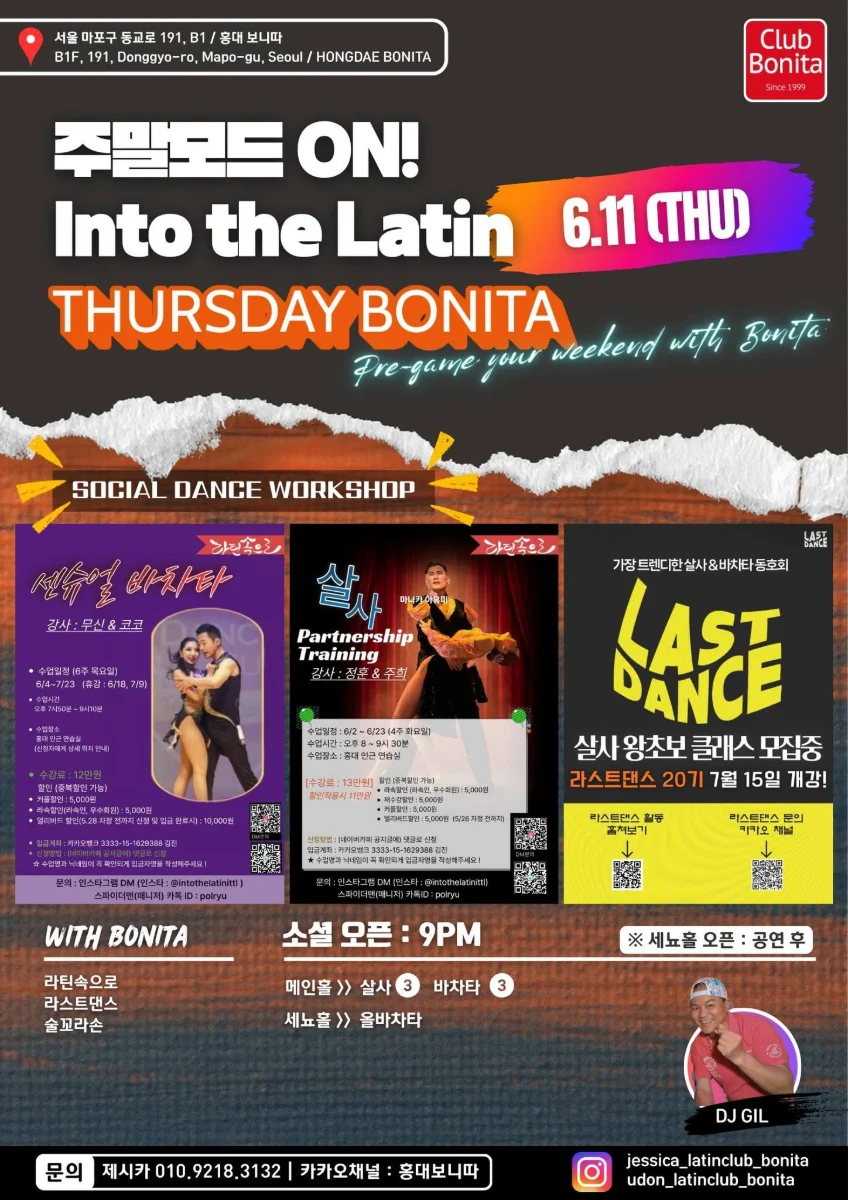
If you searched “Hongdae kizomba class” and ended up in a maze of old blog posts and scattered social media, you’re not alone. In Seoul, “Hongdae” can be used loosely (sometimes including nearby stations), and kizomba listings can be labeled as class, social, or workshop—each with a different vibe and expectation.
This admin-review draft focuses on one goal: help you find a real Hongdae-area kizomba class you can confidently try—without guessing.
Start here in Social Dance Live:
- [Seoul dance events and classes]([관련 페이지 보기](/seoul))
- [Hongdae events and classes]([관련 페이지 보기](/hongdae))
What you’re really looking for (class vs social vs workshop)
Before you click anything, decide what “class” means for you this week:
- Class: structured learning (often level-labeled like “Basic,” “Beginner,” or “Open”). Usually the best first step if you want instructions and a clear start time.
- Social: more like a dance night; you learn by watching/trying. Great later, but can feel unclear if you’re brand new.
- Workshop: a focused topic session (e.g., musicality or a style like tarraxo). Awesome—but it may assume fundamentals.
On Social Dance Live, posters typically make this distinction obvious. For example, this Hongdae-tagged poster is labeled as a class/workshop category and includes “Basic” in the title:
- [Kizomba Hongdae Class Session 13 / TARRAXO (poster)](정확한 지역 예시는 확인된 뒤 추가합니다)
Beginner checklist (before you commit)
Use this quick checklist to reduce beginner anxiety and avoid showing up to the wrong level.
1) Level (is it truly beginner?) Look for words like *Basic, Beginner, Intro, Open Level.* If you only see advanced topic wording, treat it as “maybe not first-timer friendly” and keep searching.
2) Language (is it English-friendly?) Don’t assume. Some classes are bilingual; others are taught in Korean but still workable if the teacher demos a lot.
- Best signal: the poster caption/title explicitly mentions English (EN / English OK) or the organizer notes it.
- If it’s not stated, treat English support as possible but unconfirmed—and consider DMing via the contact on the poster.
3) Partner policy (do you need a partner?) Many social dance classes *commonly* rotate partners, but policies vary by organizer.
- Check whether the poster mentions rotation, couple-only, or no partner needed.
- If it’s not stated, assume you can still attend—but plan to arrive early and ask the organizer.
4) Trial class basics (what “trial” usually means) “Trial” or “one-time drop-in” can mean anything from a first-time-friendly intro to simply “you can pay per class.” Because pricing and booking rules vary, the safest approach is:
- Use the poster to confirm date/time/location
- Use the venue page to confirm where the room actually is
- Use the organizer contact to confirm how to join/pay (especially if you’re short on Korean)
5) What to wear (simple, not overthinking it) Aim for comfort and stability:
- Breathable top + pants/shorts you can move in
- Shoes that feel secure (avoid sticky soles; many beginners bring clean indoor shoes)
- A small towel/water if you sweat easily
How to search on Social Dance Live: Seoul → Hongdae → Kizomba → Classes
Use a “broad-to-specific” flow so you don’t miss good options that are tagged slightly differently.
- Open [Seoul dance events and classes]([관련 페이지 보기](/seoul))
- Narrow to [Hongdae events and classes]([관련 페이지 보기](/hongdae))
- Open the Kizomba feed to sanity-check what’s active across the city:
- [Kizomba in Seoul]([관련 페이지 보기](/genres/kizomba))
- Then validate each candidate by opening:
- the poster (for date/time, class label, level)
- the venue page (for the Hongdae area tag + navigation)
If a listing seems close but not exactly Hongdae, check whether it’s actually Hapjeong / Sinchon / Mapo—often “Hongdae-adjacent” in real-life transit terms.
How to verify it’s the right class (without guessing)
When you open a poster, confirm these items in order:
- Area tag: does it say *Hongdae* (not just “Seoul”)?
- Venue name: copy/paste it into your map app if needed.
- Date + start time: posters are your best “latest truth” compared with old blog posts.
- Class level label: “Basic/Beginner/Open” vs advanced topic.
- Language notes: only count it as English-friendly if it’s explicitly stated.
Then open the venue page to reduce “wrong door” stress. Example from the class poster above:
- [홍대 아쿠아/M2 댄스연습실 (venue page)](정확한 지역 예시는 확인된 뒤 추가합니다)
First-night practicals for Seoul classes
A few practical habits make your first class smoother, even if you’re going solo:
- Arrive 10–15 minutes early to find the correct room/floor and ask about sign-in.
- Keep expectations flexible: payment/booking methods differ by organizer, so rely on the poster details and any listed contact.
- Rotation etiquette: in many partner-dance classes, switching partners is common, but you can usually opt out politely if you’re uncomfortable.
- Personal comfort first: it’s normal to take breaks, ask for a repeat demo, or step aside for a song.
If you can’t find a Hongdae option (expand your radius)
If Hongdae-tagged kizomba classes are limited on your dates, expand the search without abandoning your intent:
- Check Hongdae-adjacent areas (often easier than it sounds by subway): Hapjeong / Sinchon / Mapo.
- Stay within kizomba, but consider intro-friendly formats when clearly labeled on posters (intro class before a social, or open-level basics).
- Re-run the same verification steps (area tag → poster details → venue page).
Next action: open [Hongdae events and classes]([관련 페이지 보기](/hongdae)), then compare 2–3 kizomba listings by level label + venue clarity + language note before you commit.